
Twenty-Four Years of the Internet Refusing to Sit Down
A nostalgic walk through the technologies, trends, mistakes, and reinventions that shaped the web and everyone building it.
Read More
The Architecture Debt Nobody Tracks
Not all technical debt lives in code. Some of the most expensive debt lives in stale data models, service boundaries, undocumented decisions, hidden configuration, and the handful of people who still know how everything actually works.
Read More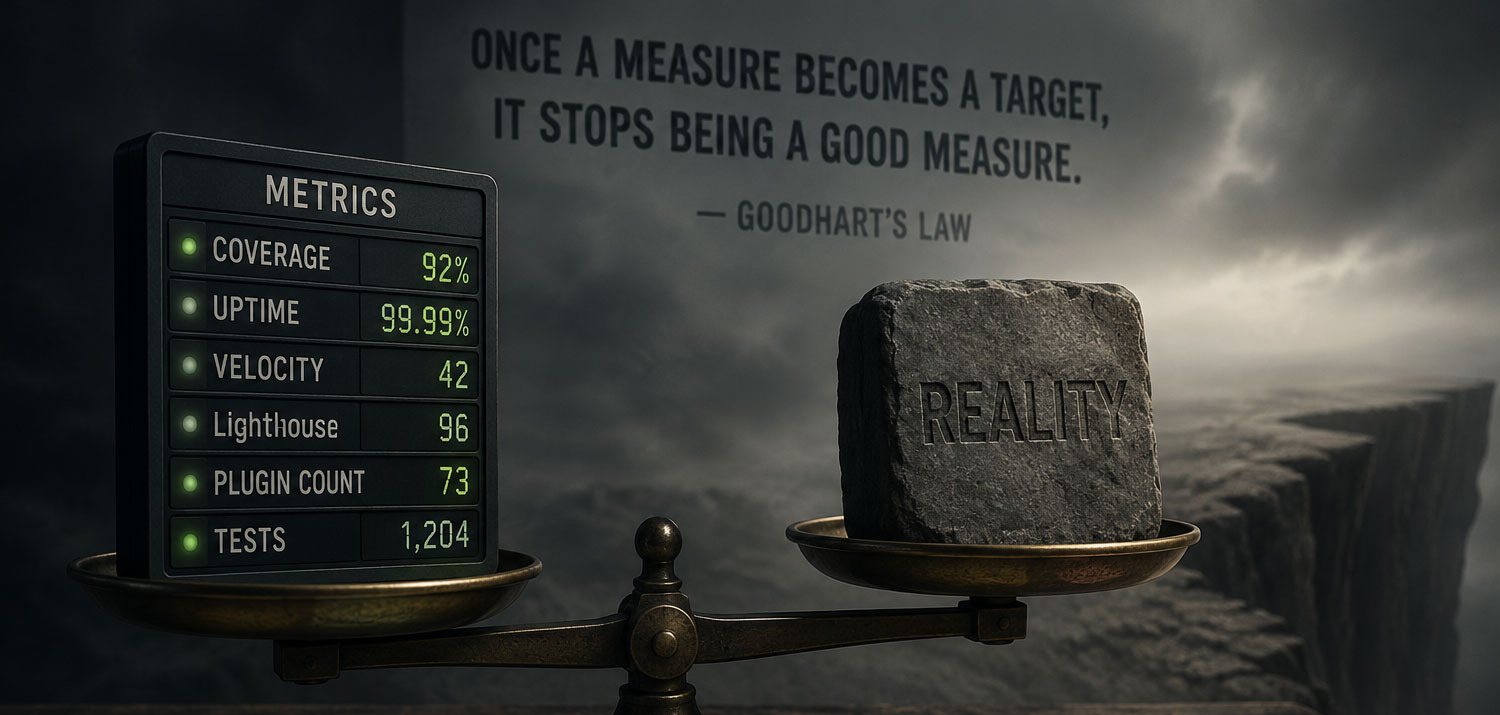
The Industry’s Obsession with Proxies
Software teams rarely optimize for quality, they optimize for whatever's easiest to measure. A look at Goodhart's Law and the danger of confusing proxies with reality.
Read More
Programming Is The Easy Part
Programming isn't what makes or breaks a successful contractor. After more than a decade in consulting, these are the lessons that actually determine whether clients keep calling.
Read More
The Quarter Was Saved. The Platform Wasn’t.
Every shortcut creates a future obligation. Eventually somebody pays.
Read More